


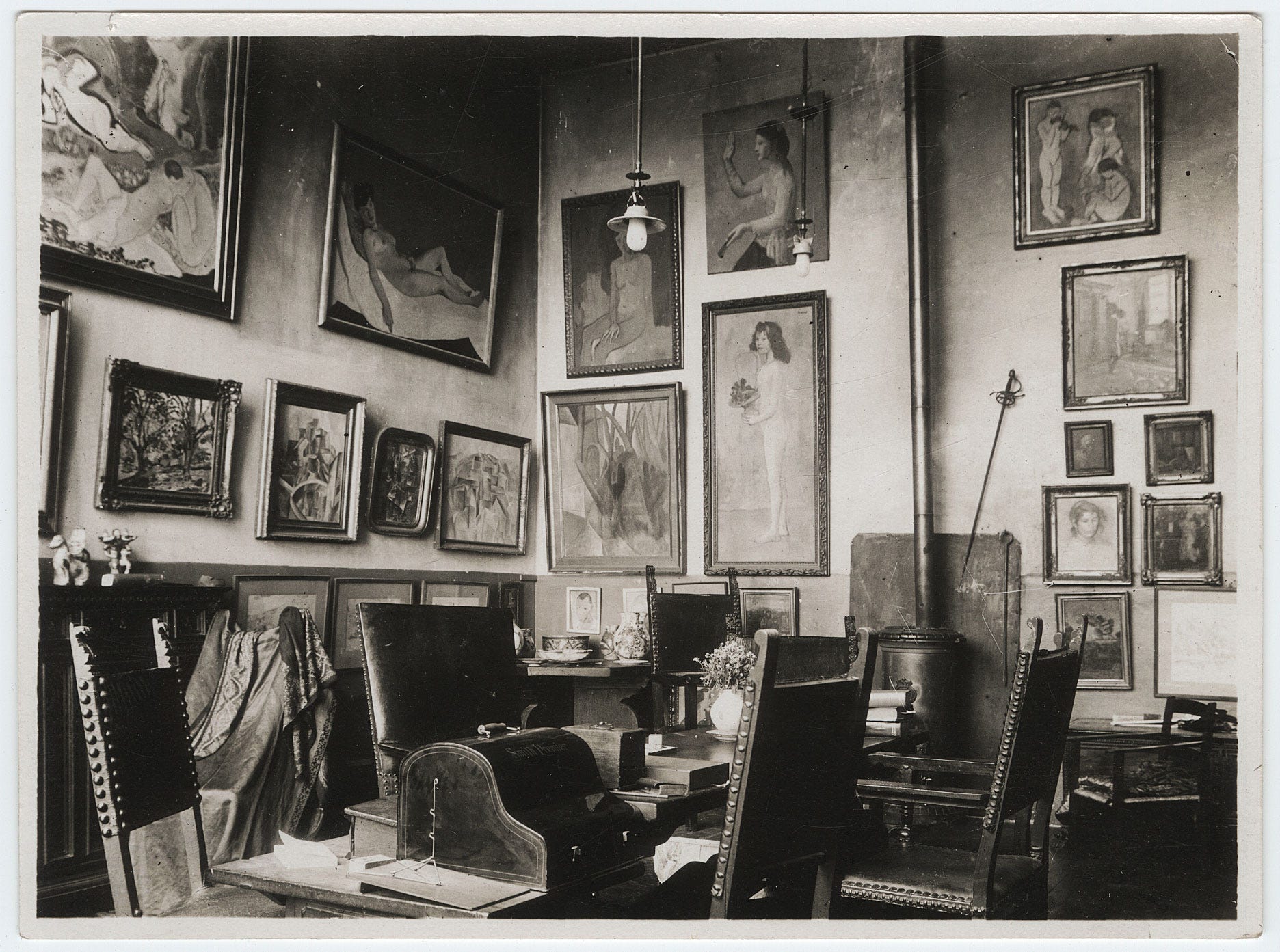
When I moved into my apartment a year ago, it had promise. “Good bones,” as they say. High ceilings, big windows, plenty of natural light. A recently updated upper floor of a wartime home, tucked away in a canopy of trees, it felt like a mid-century modern treehouse.
But there were also some glaring issues.
At first, improvements were obvious and easy. I got rid of the cow skull on the kitchen shelf, the framed print of two jaguars French kissing, the five-foot-long stuffed caterpillar with an unnervingly human face. I cleared out the clutter: dull kitchen knives and dusty china cups and a broken blender1. I threw out the big screen TV.
This is one of the first lessons I learned about home design, actually. Most of creating a beautiful room is simply removing what is ugly. The same is true for designing a beautiful life, I think. Mind you, this requires work; a kind of rebellion against the default inertia that can govern one’s life left unattended.
There were cool things in the apartment too! A Persian rug, an open-concept pantry, plenty of plants. But only by removing the less cool things could what is beautiful truly be seen.


After gorging on the low-hanging fruit, changes became less obvious, slower to surface. Something still felt a little off, but I had to live in the space for a while, let its beauty dawn on me. Then, gradually, subtly, almost imperceptibly, I started to make small improvements; unnoticeable by the day but unmistakable by the month.
I kept taking stuff out of the kitchen that I never used or didn’t enjoy using. I found a hand-carved coffee table on the side of the road, made by a furniture factory in town that closed in the 80s, and replaced the old coffee table, which was just a piano bench. A few months later, I found the matching end table on the side of a different road that I put near the entryway, replacing this weird wobbly table that looked more like a bunk bed for babies. I replaced the scary plastic knife block with a lovely wooden one. I brought more books out of storage and filled the shelves (and most other flat surfaces). I found a paint-splattered art easel left at the curb in an old-money, East Egg type of neighbourhood that I brought home, mostly as a joke, but then it fit with the room. I put up art that I had been given over the years: a percolator print from Tofino, a fox in a knit sweater drawn by a friend from St John’s, a hand-painted replica of Van Gogh’s Café Terrace at Night, a wintry farmhouse in New England that my Mom gave me for Christmas. I planted fresh basil and rosemary in terracotta pots; dried thyme and rosemary with twine above the kitchen sink; hung my Turkish copper coffee pot and two cast iron pans on a wall. I replaced the abrasively loud electric coffee grinder with a wooden hand-cranked one that makes morning coffee more of a ritual2. (I almost put in a kitchen backsplash of textured porcelain tiles imported from Spain, but my landlord made some budget cuts.)
I adorned my apartment with everyday objects that I adored; things that felt special or had a story or held meaning. Another way to say this is that I put more “me” into the room. With each small decision, the space became a clearer reflection of my personality. It felt more like home.


Most of my inspiration came from design books or Pinterest, developing a visual literacy for what kinds of spaces “worked” or felt aesthetic to me.
This, I think, is how taste is trained: the slow and patient process of consuming a thousand different inputs (increasingly less randomly sampled), metabolizing them, applying value judgments (is this good or bad?), and looking for patterns to learn what I find compelling and why.


I believe our surroundings exert themselves on us. Places accumulate on our psyche, even if we’re not aware of it. Everything in our environment twists and turns our mood, gently but assiduously. A room either speaks of enchantment or dispels it.
There is a certain sensitivity to context required. The objects within a room must conspire to speak the same language; a language that harmonizes with the house, that then harmonizes with the land on which the house is located. A cedar and stone A-framed lodge may look stunning in the mountains of the Pacific Northwest, but would appear awkward in the rolling farm hills of Ontario. Most homebuilders don’t take context into consideration, which is why modern homes tend to look and feel out of place.
Some people would think it’s silly to invest in a space that I only rent. I may not be here in a year! But I came to a point where I realized that if I was unable to dissolve the feeling that where I am living is temporary, it would never feel like home.
It seemed silly to assume I’ll make my future home a kind of Eden to raise children in, yet maintain a casual carelessness for where I find myself now.
~~~
I think that designing a room is a lot like writing a good essay. At least, it’s like editing an essay which, as anyone who has tried knows, is where the real writing begins.
